





In the first seven game World Series since 2019, the Dodgers won back to back elimination games to bring the trophy back to Los Angeles. Going into this series, almost everyone accepted that these were the two best teams in the playoffs. The Blue Jays were on an offensive tear and seemed unstoppable, while the Dodgers had only lost one game in their entire playoff run, knocking off the Brewers and the Phillies, the two top teams in the National League.
Despite coming off a long, seven game series versus the Mariners in the ALCS, the Blue Jays rode a nine run sixth inning to victory in Game One. They got Blake Snell out of the game early and took advantage of the Dodgers’ lack of bullpen strength. Then, in Game Two, Yoshinobu Yamamoto threw his second complete game of the postseason, leading the Dodgers to victory. He struck out eight batters and only allowed four hits on 105 pitches.
Game Three tied the record for the longest game in World Series history, going eighteen innings, with both teams fighting it out until the very end. Both starters left the game in the fifth inning, making it a long, hard fought bullpen battle. Each team scored five runs by the seventh inning, but then both teams were shut down from the eighth to the seventeenth, the length of a full game. Key relievers stepped up for both teams, including Will Klein going four scoreless innings for the Dodgers and Eric Lauer going 4.2 scoreless innings for the Blue Jays. In the bottom of the eighteenth inning with no outs, Freddie Freeman broke the stalemate by crushing a 3-2 sinker to center field for a walk-off solo home run. With his walk-off grand slam in last year’s World Series, Freeman became the first player in MLB history to have multiple walk-off home runs in the World Series. Shohei Ohtani got on base nine times, breaking a post-season record and tying an MLB record. He went 4-4 with two home runs, two doubles, three RBIs and five walks. Sophomore Harper Ewer described it as “one of the best individual performances in baseball history.”
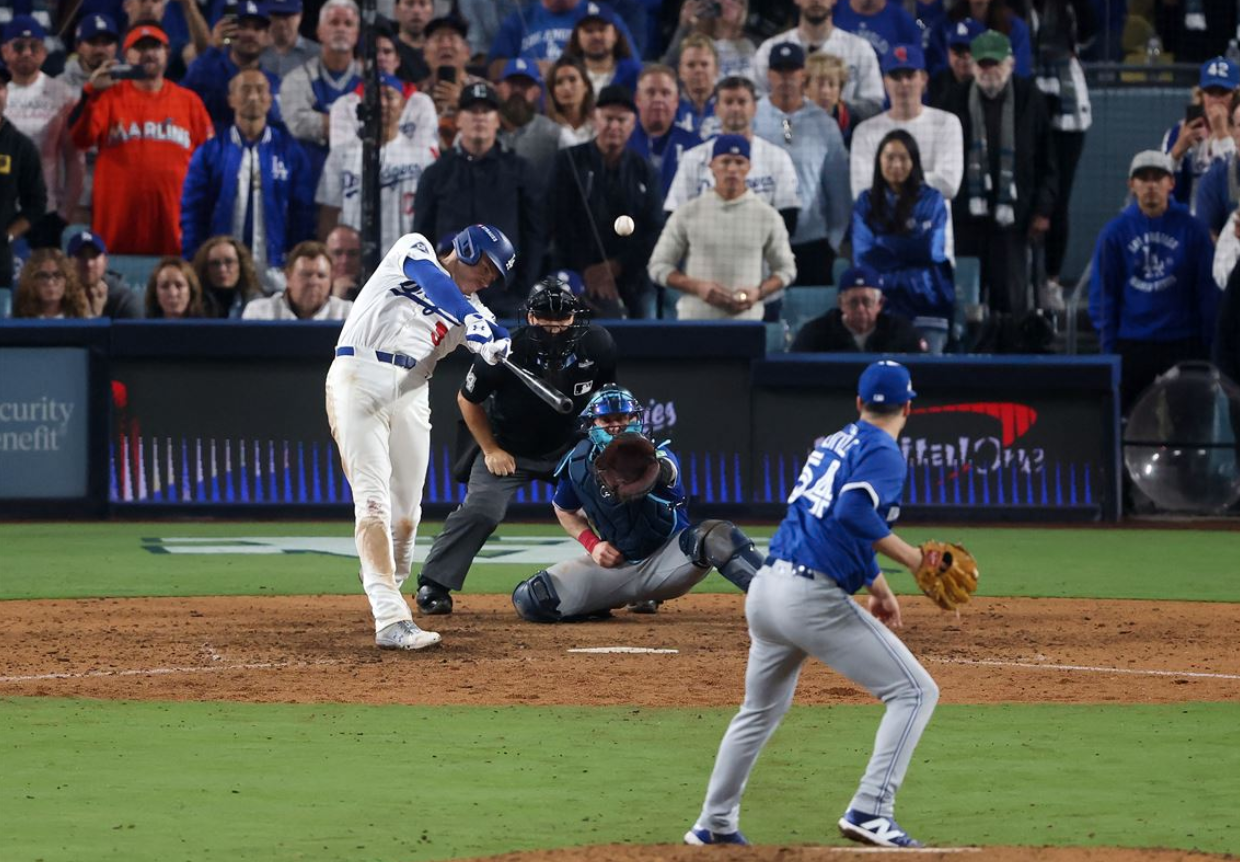
After this performance, Shohei took the mound in Game Four, but he could not hold off the talented Toronto offense as the Blue Jays won 6-2 to even up the series at two games a piece. Vladimir Guerrero Jr. went 2-4 with a two run home run to help secure the victory for the Blue Jays. In Game Five, Trey Yesavage, a 22 year old rookie who started the year in single-A, took the ball for the Blue Jays and broke the record for most strikeouts by a rookie in a World Series game with 12. Yesavage also went seven innings only allowing three hits and one run, leading the Blue Jays to a 6-1 victory and putting them one game away from a World Series title.
However, the Dodgers had Yoshinobu Yamamoto back on the mound for Game Six, and he pitched another great game, going six innings only allowing one run. The Dodgers scored three runs in the third and never looked back, winning the game 3-1 and setting up a Game Seven.
After a 162 game regular season and a long postseason run, it all came down to one game, Game Seven of the World Series. Shohei Ohtani took the mound for the Dodgers and Max Scherzer pitched for the Blue Jays, but both came out relatively early in the game. The Blue Jays struck first on a three run home run by Bo Bichette in the third inning. Then, the Dodgers bounced back by scoring one run in the top of fourth inning off a sacrifice fly. In the bottom of the fourth, Andres Gimenez got hit by a pitch and the benches cleared, but no one was ejected. In the top of the sixth, the Dodgers scored again on another sacrifice fly, making the score 3-2. Then, in the bottom of the sixth, the Blue Jays got an insurance run, making their World Series hopes seem closer than they ever were.
However, the Dodgers were far from out of the game, and two solo home runs in the eight and ninth inning tied the game up. The Blue Jays had a chance to walk it off in the bottom of the ninth with the bases loaded and only one out, but Yoshinobu Yamamoto came out of the bullpen on zero days rest and got out of the jam. With the bases loaded and the infield in, Dalton Varsho hit a ground ball to Miguel Rojas who gunned out Isiah Kiner-Falefa at the plate on a very close play. Kiner-Falefa probably could have scored, but as sophomore Jamie Franklin explained, “He got no secondary lead, and he was only a few feet off the bag when the pitch was thrown.” A few feet may not seem like much, but in a play that came down to inches, it was the difference between winning and losing a World Series.
After a flyout to left center that almost resulted in a bad collision, the game went into extra innings. The tenth inning went scoreless, but in the top of the eleventh with two outs, Will Smith hit a solo home run to left field putting the Dodgers up by one. Then, in the bottom of the inning, Yamamoto stayed in the game to finish it out. After a lead off double by Vladimir Guerrero Jr. and a sacrifice bunt by Isiah Kiner Falefa that moved him over to third, the Dodgers intentionally walked Addison Barger to set up the double play ball. Then, Yamamoto got the ground ball he needed and Mookie Betts turned a double play to make the Dodgers back to back world champions.
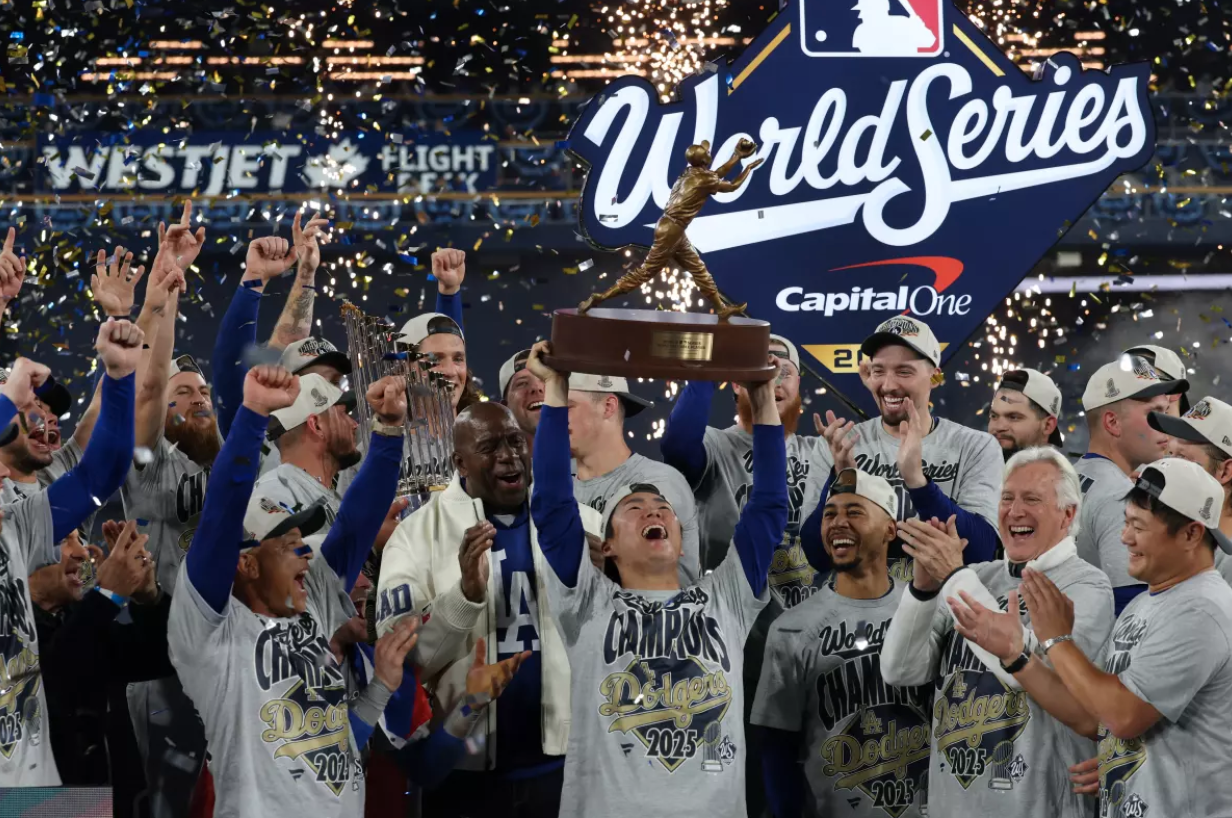
The series ended with the most innings ever played in a World Series because of the eighteen inning game and seven game series, breaking the record in the seventh inning of the last game. Yoshinobu Yamamoto won the series MVP for his three wins in the series, one of which closed out the final game.