









For the past couple of weeks, my TikTok “for you” page has been full of shocking images and interviews of what it is really like to climb Mount Everest. Despite the ideal time for summiting being in late April or early May, images of the summit of the tallest mountain in the world have recently resurfaced on social media, and it has brought up many questions and controversy about climbing Everest.
Historically, climbing Mt. Everest has been one of the hardest feats of mankind. Over the years, an estimated 200 bodies have been left on the mountain, unable to be brought down. With a total death count of over 300, Everest has claimed the most lives out of any mountain to date (Preiss). But if so many people die, why do we still climb Everest? The answer is simpler than one would imagine: sherpas. If you aren’t familiar, sherpas are the people native to the Himalayas who make a living from bringing climbers up and down the mountain, often carrying all of the gear too. Because of this safety net, people have become increasingly confident in attempting to summit the mountain.
The average cost of climbing Everest ranges from $60,000 to $200,000 (Arnette). If you have the physical capacity to climb, it practically means nothing if you don’t have at least $60,000 of disposable income, and that isn’t counting the many practice climbs like Dinali or K2 that would commonly be done before the Everest climb. Just a permit to climb costs over $10,000, but you would need gear, traveling expenses, a sherpa, insurance, and amenities like food, water, and oxygen. Companies have advertised all-inclusive packages for over $100,000 for you to be practically carried to the top with prepared food, multiple guides, a luxurious tent, and everything you could possibly need (Arnette).
Senior at HHS, Emma Kelley, was unaware that it cost that much to climb the mountain, but said that it “Makes sense because you need a lot of gear to stay warm, and you need a lot of tools to climb. It’s still impressive to climb, but it is pretty crazy that people would spend that much money to risk their lives to climb a mountain.”
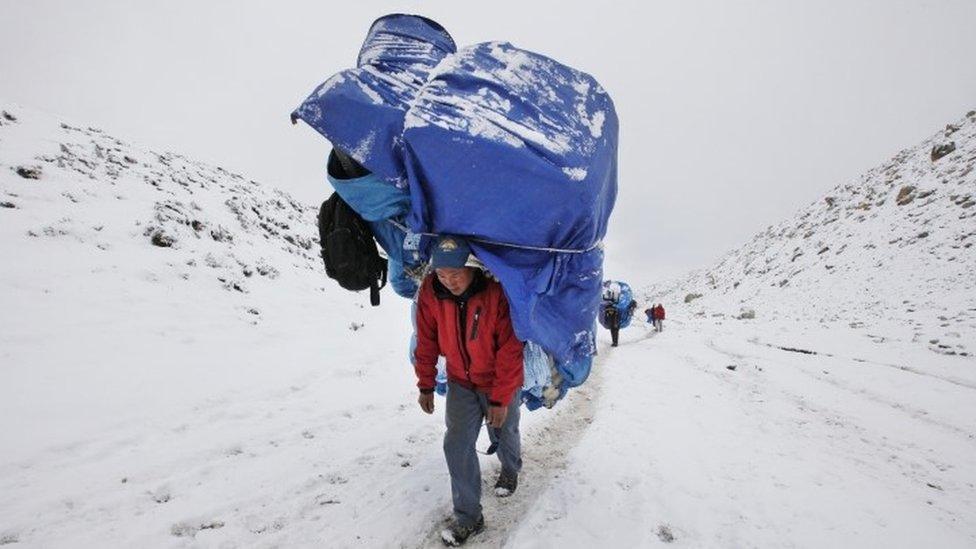
Sherpas have the most dangerous job of all, and to add to that, they are expected to risk their lives to save their clients, which is why, although Sherpas are expert climbers, they make up one-third of Everest deaths (Preiss). There have been countless cases where sherpas have put their lives on the line and died attempting to save the lives of inexperienced clients.
Another HHS student, Emmy Oppedisano, commented on the privilege of these climbers. She stated, “Now that more people know the truth about the cost, when people brag about climbing Mount Everest, they are basically just bragging about all the money they had that allowed them to climb.” She continued, “I don’t really see it as an accomplishment, I just see it as unnecessary wealth.”
Inexperienced climbers are dangerous and unacceptable. There should be no case where a local Nepalese sherpa should die while carrying a privileged climber’s gear upon their back. Although Everest climbers have brought wealth and development to rural areas of Nepal, the only reason that these sherpas climb the mountain is out of necessity and survival. It is important that legislation protects the sherpas and ensures that they are compensated adequately, and that it is not the only option for work in rural areas of Nepal and the Himalayas. As social media exposes the truth of Everest, more people must speak out and spread awareness to fight for the rights of Sherpas. Nobody should have to risk their lives to make enough to survive.
Works Cited
Arnette, Alan. How Much Does It Cost to Climb Everest? – 2025 Edition | The Blog on Alanarnette.Com. 13 Jan. 2025, https://www.alanarnette.com/blog/2025/01/13/how-much-does-it-cost-to-climb-everest-2025-edition/.
Preiss, Danielle. “One-Third Of Everest Deaths Are Sherpa Climbers.” NPR, 14 Apr. 2018. Take A Number. NPR, https://www.npr.org/sections/parallels/2018/04/14/599417489/one-third-of-everest-deaths-are-sherpa-climbers.