

















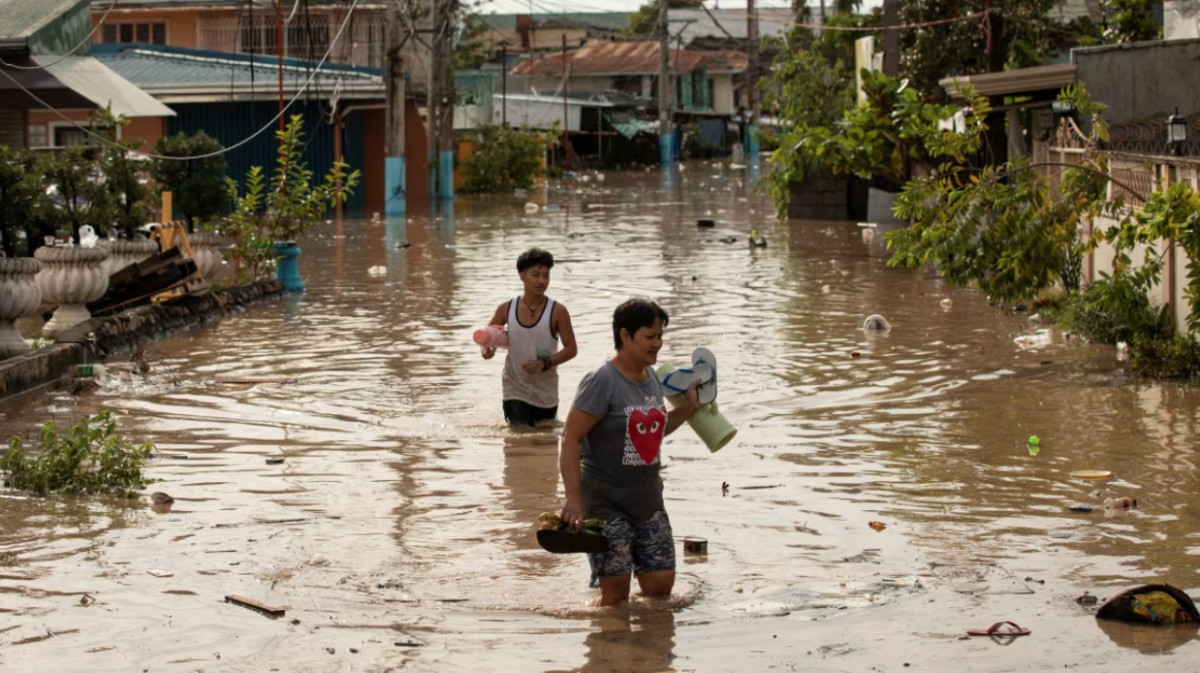
Destructive winds, mass community flooding, and the need for mass evacuations (especially in coastal and low-lying areas) have all come together to create what Filipino residents are now calling the November Storm, which has become the name for the second half of the month due to the immense havoc and devastation caused by these phenomena. Countless provinces have turned into submerged neighborhoods with overflowed rivers and the sites of mass communication failures, blocked roads, and damaged homes.
The southern urban areas were also the sites of long blackouts as floodwaters rose. Emergency responders worked throughout the evening, moving dozens of families from their homes into already crowded evacuation zones. These centers, strained by limited space and growing waste, became tense environments as residents anxiously sought updates about the condition of their houses and belongings. Responders continued relocating families throughout the night as conditions worsened.
Weather forecasters show how this particular typhoon has emerged during La Niña: a global weather phenomenon characterized by higher moisture and stronger storms in Southeast Asia in the summer. There is also a much colder Pacific Ocean in the winter. This situation could shed light on the system’s rapid growth and subsequent intensification before making landfall. AP Environmental Science junior Liam Jordan mentioned how the storm ties into some topics they recently explored in Environmental Science. “We just learned how La Niña shifts rainfall and raises the chances of big storms,” Liam stated. “To witness something this serious occur right now makes the entire situation feel more real rather than just notes on a page.”
Students started sharing their thoughts online about the videos. Another student, Kelvin Kamotho, shared his shock about how lives change so instantly for people in the affected places. “You don’t think about how fast everything can be washed away.” Kelvin commented. “One day you are at home, the next day you are evacuating. Some places are so vulnerable.”
Once responders complete their work, there are many things community members will still need to address. They will need to start cleaning, reconstructing the damaged homes and farms themselves, and slowly return to their daily routine. Not to mention restoring the order in life by repairing the damaged roads and power lines. People will need to manage and cope with the effects of the November Storm with the continued unpredictability of the world’s highly fluctuating climate and capricious weather.