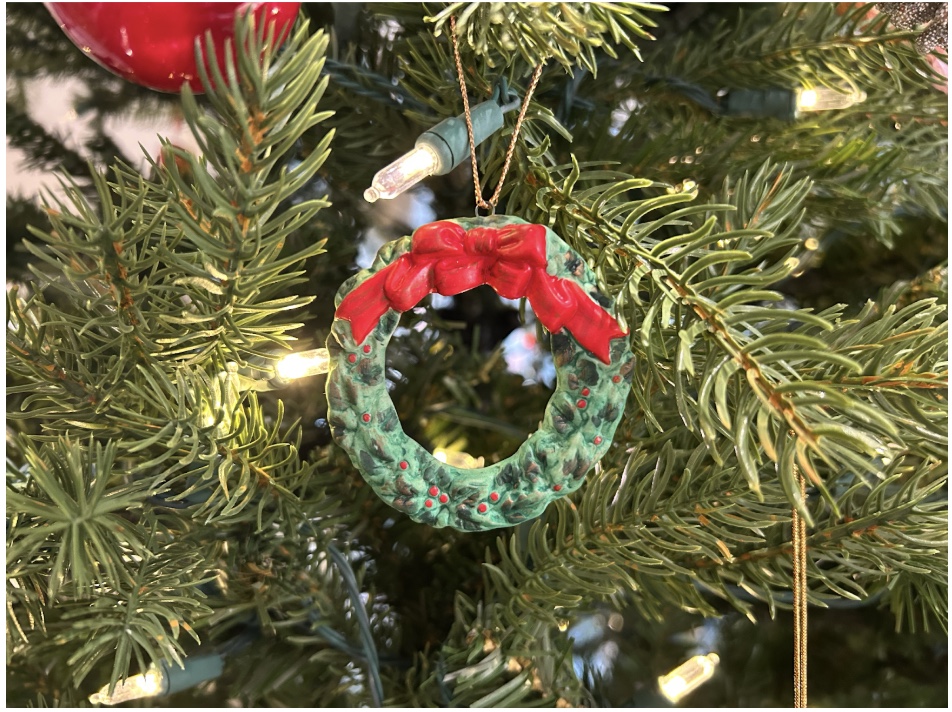










Putting a large, living tree in your house for a few weeks, decorating it, and later disposing of it just to buy a new one the following year seems like a peculiar concept, but it is normalized during the holiday season when hundreds of thousands of people bring evergreen trees into their homes as Christmas decorations. Having to water the tree everyday and vacuum the floors countless times just to find more pine needles everywhere has led people to invest in artificial Christmas trees that require less maintenance and could be reused every year.
Connor Cease, a sophomore at the high school who gets his Christmas tree from the tree lot by the Hingham Bathing Beach every year, explained how “Our family got our tree at the same place every year, and it was a tradition for us to go and pick out a tree and then decorate it together.”
Tradition is a key reason why families throughout the country buy a new tree every year and strap it on the top of their car to bring it home. Many families throughout Hingham use this argument among others to keep buying a real Christmas tree every year, but a new study by the American Christmas Tree Association (ACTA) found that out of all households putting up a Christmas tree this holiday season, only 17% of those would be displaying a real tree, while the other 83% would be using artificial trees. Sophomore Harper Ewer found this statistic “shocking because I feel like most people I know get a real tree every year.”
Artificial Christmas trees were first invented in the 1880s using goose feathers, but they didn’t become widely used in the USA until around the 1970s when better technology made them appear more realistic. With some fake trees today, it can be hard to tell if it is real or not unless you look very closely. By the early 2000s, around 80% of people celebrating Christmas were putting up artificial trees.
Christmas tree prices are also increasing every year, with the average cost this year being between 80 and 100 dollars. The cost of a fake tree can vary depending on its size and quality, stretching from as low as below 100 dollars and up to several hundred dollars. But, an artificial tree is generally a one time purchase whereas a real tree is bought again every year, making it a worthwhile investment to save some money if you continue to reuse the same artificial tree.
So, because the majority of the American population uses artificial trees on a much larger scale than real trees because of their convenience, Americans generally prefer artificial Christmas trees over natural ones.