


























Technology evolves every day in front of people’s eyes, and people seldom notice. One piece of technology that has revolutionized over the last decade is artificial intelligence, or AI. Artificial intelligence is everywhere, ranging from huge websites such as ChatGPT to chatbots that a company uses instead of a real person. The influence of AI is growing, but so are its capabilities.
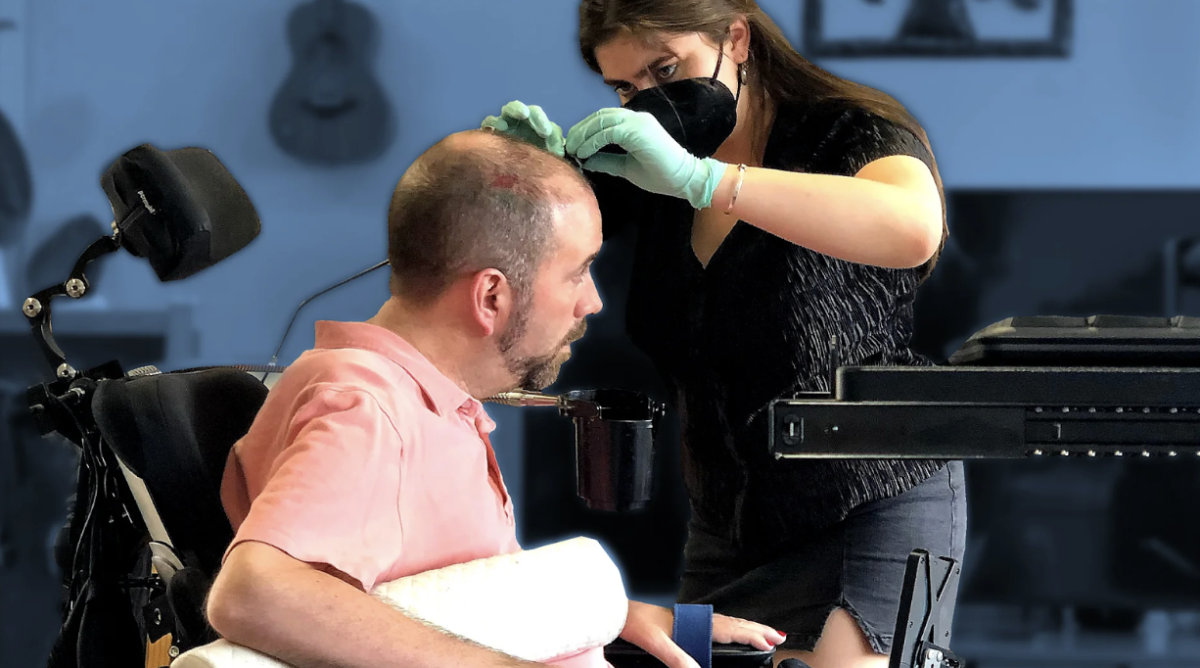
Artificial intelligence is more than answering questions or tracking data. New studies show AI is capable of reading brain waves and inner thoughts. In a study at Stanford, a woman who suffered a stroke nearly two decades ago could now see her brain thoughts formed into sentences through a form of artificial intelligence.
Artificial intelligence is now more than just a helpful hand, and sophomore Graham Frank says, “Artificial intelligence is extremely open-ended with endless possibilities, and continues to fascinate me every day.”
Another study in Japan unveiled a technique with the ability to generate detailed descriptions of what goes on in human minds. These studies display that, “In the next few years, we will begin to see these technologies being commercialized and deployed at scale,” says Maitreyee Wairagkar, a neuroengineer. The advancement in artificial intelligence and technology as a whole provides a positive outlook for future years.
Studies about the brain have ranged back to the 1960s, but with monkeys. Neuroscientists learned that monkeys could activate a single neuron in their brains with a reward. These studies span all the way to the present day, but now with humans and understanding the brain with speech.
Sophomore Colin Patterson was, “Truly amazed to see the leaps AI has taken. Everyday I hear about new stories and the future of AI looks bright.”
Scientists have continued to run countless tests to capture all possibilities of AI reading inner thoughts. Whether it starts with hand motions or actual brain reading, it is progressing exponentially. Frank Willet explains, ‘With the current technology, we’re not able to get somebody’s fully unfiltered inner speech perfectly accurately… But we were able to pick up traces of inner speech pretty clearly in these different tasks.” Artificial intelligence was 74% accurate in this study, and that is only the beginning.
At the University of California, AI was able to not only decode words, but pitch and speed as well. Speaking is so much more than just words, as the way a word is said holds immense value. AI is also helping to recreate images seen by the eye through a variation of an MRI.
Artificial intelligence has evolved greatly, and it continues to evolve daily. Scientists and professions continue to find new ways to utilize AI as a safe way to benefit the lives of everyone.