


















Seemingly every year, the same debate always reappears over the necessity of an ancient tradition: should America still utilize daylight savings?
The root of this issue dates back to 1895, as William Willett of Britain talked among his peers in construction over enjoying an extra 80 minutes of recreational time each spring. However, due to his low position within society as a construction worker, his ideas never made it to the British Parliament (History.com).
Real momentum occurred during World War I, as Germany and Austria set their clocks back one hour in 1916 to save energy needed for warfare. Used solely as a wartime effort, this idea dissipated with the ending of WWI, up until the presidency of Franklin D. Roosevelt reinstated this extra hour in world war II for similar purposes (History.com).
In 1966, the Uniform Times Act was passed within Congress, leading to an hour every October and gaining one hour every April. These months were later changed to November and March in the year 2007 (History.com).
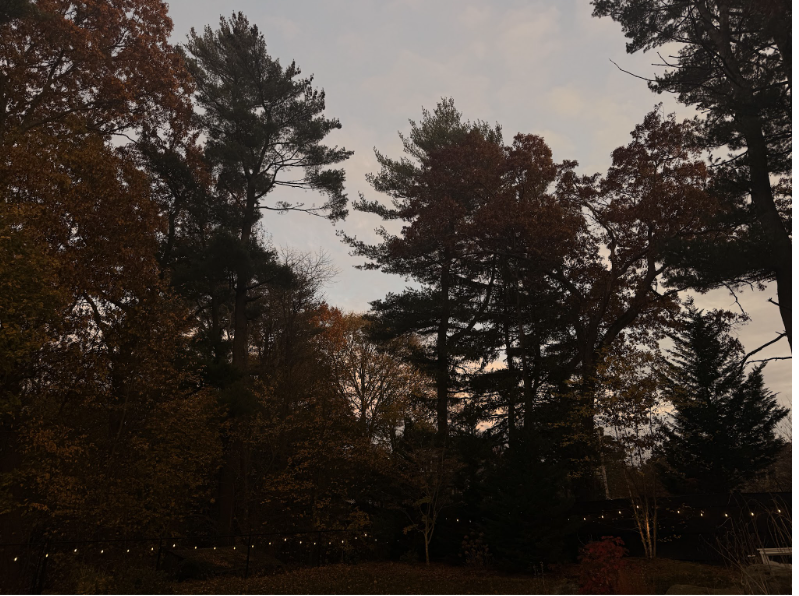
With the clocks falling back in Autumn, and the Hingham sunsets now creeping into 4 pm territory, opinions over the continuation of the routine are split among Hingham High students.
When asked about daylight savings, multiple people, such as Sophomore Asher Ellis, falsely attributed this idea to ancient farmers. Ellis was then enlightened as to the true beginnings of daylight savings, and responded, “I argue for no daylight savings, since we are not in the middle of a world war right now. It is just left over precautions from the past and it needs to be reworked.”
Many around the country support Asher’s argument. According to NBC News, Karen Splika, America’s President of the Senate, stated in an endorsement [for a vote on this issue occurring October 29, 2026], “This should be the last time that Massachusetts has to change our clocks. It would be better for our health, safer for our roads, and remove one more complication from everyone’s lives.” (NBC News). This vote has yet to lead to any concrete action in removing Daylight Savings, but with Splika’s enthusiasm on the subject, some change is bound to occur.
On the other side of the spectrum, Junior Libby Baxter advocates for the continuation of this procedure, as she shares, “I feel like as a high school student I need all the sleep I can get, so that extra hour in the fall really helps”. Her side of the story reveals a more innocent point of view, simply elaborating that this one hour in the fall only helps students who are forced to go to bed late due to schoolwork.
Surrounding the days of the clocks turning back or leaping forward, opinions can be heard from every person on the street, or even within the hallways at Hingham High. Whether any serious change is to come in terms of the foreclosure of this system is still up to the dedication of the senate and those supporting them, yet thoughts on this matter seem to only grow with every coming year.