




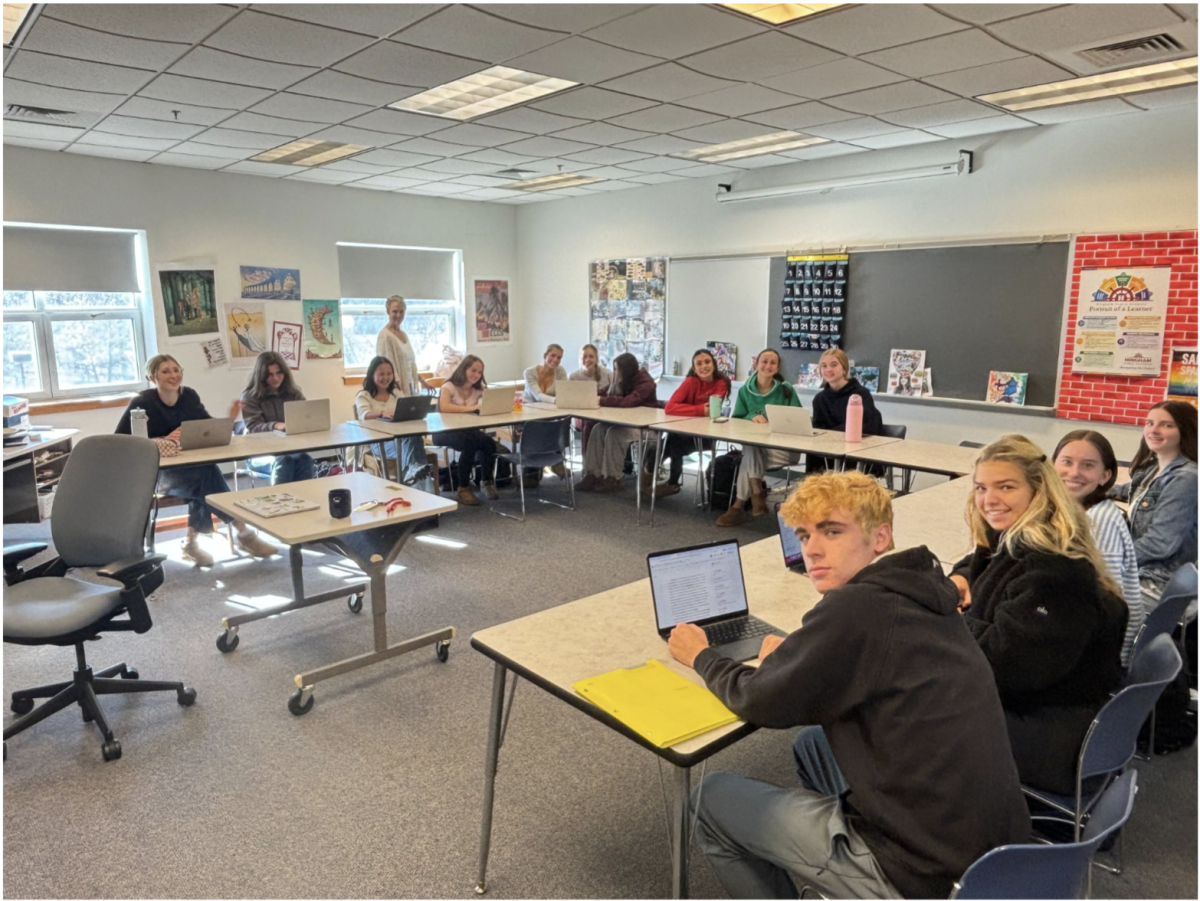














AP Research students are in full research mode. Students have contacted outside-of-school research experts to advise them and have written their research papers’ method sections. Additionally, they have done “PREP” work to organize how they will conduct their research—whether that is through a survey, experiment, innovative design, or endless other alternatives. Since direct help from Ms. Garland, the AP Research teacher, is limited, students lean on each other to peer edit and practice defending their research.
Students in AP Research come from various backgrounds (grades, subject interests, genders, and so on). However, one thing remains constant among them all: all students must have completed AP Seminar class sophomore or junior year. Speaking from personal experience, AP Seminar is rigorous and demanding. Nevertheless, AP Seminar was the most beneficial class I have ever taken. Many of my peers would say the same. AP Seminar teaches students how to analyze perspectives and lenses of different stakeholders, conduct “sideways research” (researching beyond the given information in an article or other research piece), manage time productively, and effectively write what felt like twenty essays every week. Since AP Seminar truly feels like an accelerated college course, students who go on to take AP Research share a special bond—having survived through AP Seminar’s obstacles.
After asking Ms. Garland what the one takeaway from AP Research she wants her students to take with them into their futures, she gave a thoughtful response centered around student voices mattering. Ms. Garland believes that her students can make contributions to the world even at their age. They do not need to be someone like Greta Thunberg for their contributions to be significant. With every single paper, they are contributing to a greater body of knowledge. With every project, students learn how to make things happen—contacting researchers, tracking them down, and networking (even if that includes spontaneously leaving class to call someone on the phone). Overall, Ms. Garland emphasizes the notion that student voices and research interests matter.
AP Research student Claire Rathke provided wonderful input as well. Building off Ms. Garland’s point about gaining networking and communication skills, Claire states how AP Research has really helped her “learn how to formulate emails and even contact a professor from Tufts University” to serve as her expert advisor; the class “teaches you how to speak professionally and defend your research and voice.” Isabel Klein, a senior at Hingham High School, took AP Research her junior year. She conducted a research experiment that zoomed in on her own community by examining how teacher attitudes influence student participation at Hingham High School. Through her research, she concluded that teachers do have an influence on student participation. She said that her own findings have influenced how she participates in her classes this year. Isabel Klein said that her AP Research experience “exemplifies how the class encourages students to study what they are interested in and use their own conclusions to influence how they approach their future.”