

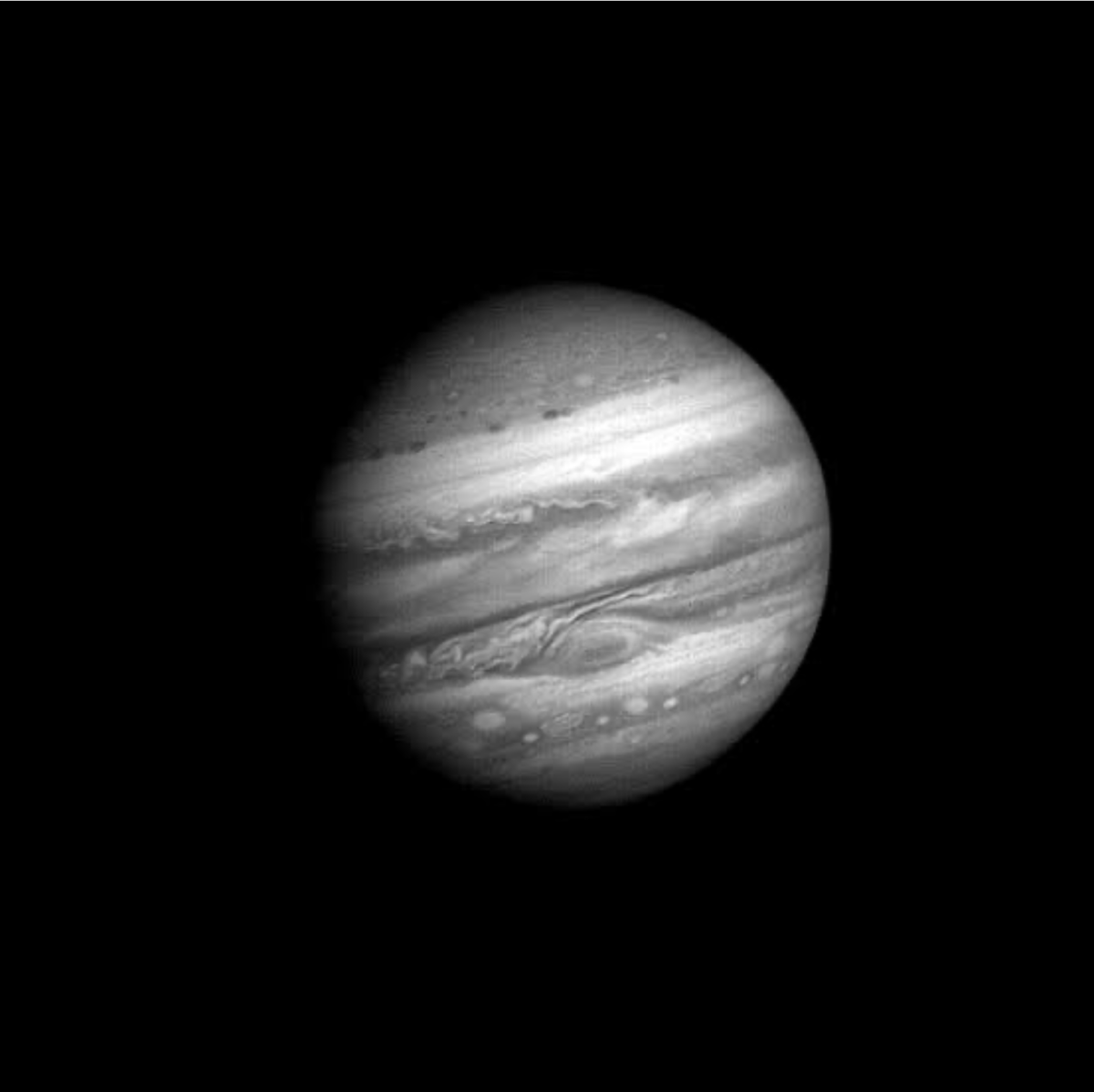



























On November 18, 2026, the unmanned space probe Voyager 1 officially reached 1 light day away from Earth. Some 16.1 billion miles away, the spacecraft has passed all of the gas giants and is officially in interstellar space. Voyager 1 is the farthest manmade object from Earth and is continuing its march into the black depths of the cosmos, actively expanding humanity’s physical reach.
Voyager 1 launched in the fall of 1977; its primary directive was to study the moons of Jupiter and Saturn and scan for atmospheric conditions prime for microbial life. Beyond its planetary endeavors, the probe’s secondary mission continues to be to explore the Heliosphere, the edge of the Sun’s magnetic field, and continue on outside of the solar system.
In 1903, the Wright brothers flew a crude airplane a few hundred feet across a beach. Less than 75 years later, NASA launched a spacecraft that has reached a distance from Earth that takes light — the fastest thing in the universe — twenty-four hours (186,282 miles per second) to elapse. AP Chemistry student Martin Seggev didactically expressed his opinions on arguably one of humanity’s greatest achievements. “That’s an incredible demonstration of what humans can do,” Martin told me in an interview. He’s clearly been touched on a deep emotional level by the event. Quoting the memorable Officer Earl from the film Cloudy With a Chance of Meatballs, Junior Sam Whittrap noted that “It’s enough to make a grown man cry. And that’s okay.”
There is clearly general positivity surrounding this milestone but it is important to acknowledge the state of the craft after nearly 50 years of travel. Voyager 1 has experienced some wear and tear over the decades, which manifested in an unfortunate issue on November 14, just 4 days before its 1 light-day benchmark. Voyager 1 faced a malfunction in which it stopped sending data back to NASA, essentially leaving the science team in the dark about the situational surroundings of the space probe. Despite this issue, Voyager 1 still sends radio signals back to earth that detail its distance from the planet, much to the relief of NASA, and Freshman Kendall Jenkins. “It’s crazy that Voyager 1 is still sending signals back to Earth,” noted Jenkins. “I was worried that we’d lost all information on the spacecraft forever.”
Voyager 1 continues to cruise into the unknown, and is expected to keep chugging along sending its location back to Earth for some time. Strapped onto the craft are details of humanity’s existence, along with the famous golden record displaying the “Sounds of Earth.” As this ship reaches a major milestone in its hopefully long career, we may rest confident that, when the time comes that Voyager 1 goes dark permanently, the human race still has its spirit secured away, awaiting discovery by new, curious individuals.