

















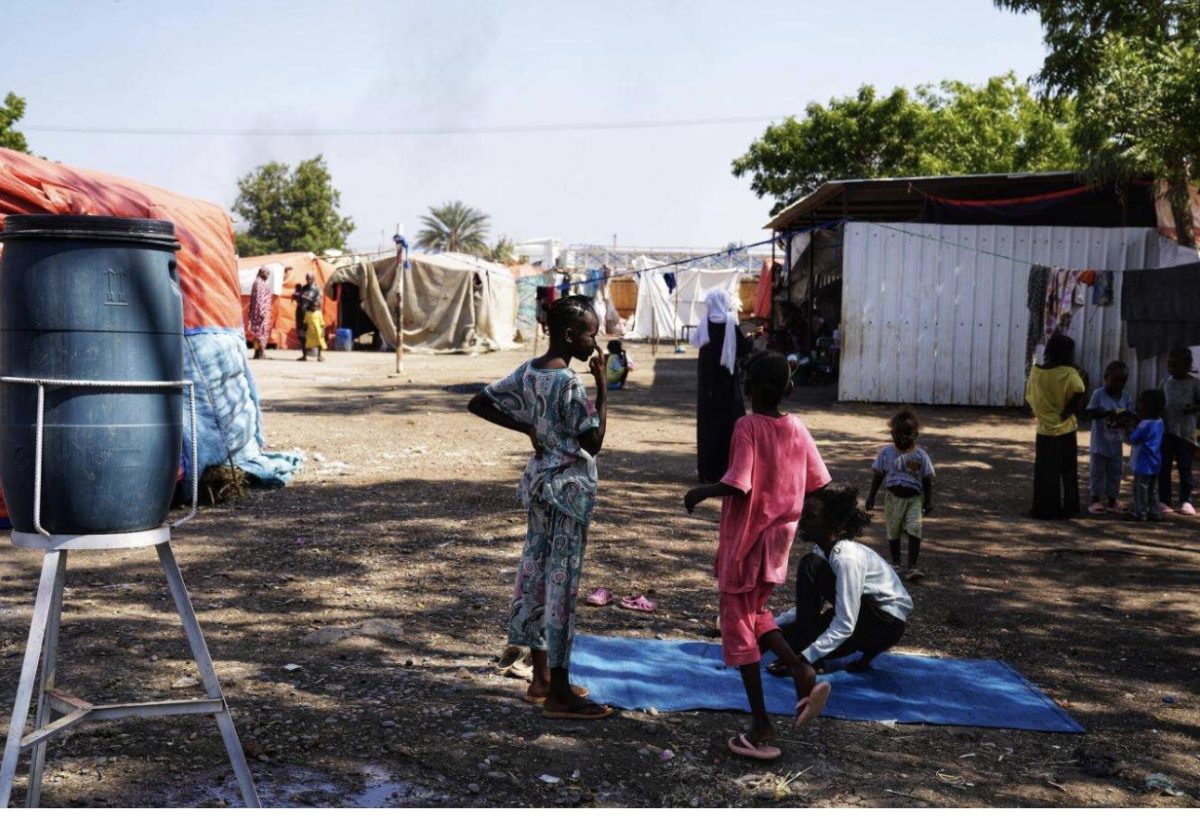
In April of 2023, a third Sudanese Civil War broke out between the Sudan Armed Forces(SAF), the government’s military, and the Rapid Support Forces(RSF), a paramilitary organization. Over the last three years, violence has spread across the country, destroying infrastructure, farming, and the livelihoods of millions.
Following recent coups and two previous civil wars in the country, Sudan was shattered by an ever-worsening humanitarian situation. Sudan remains on watchlists and the top of every humanitarian crisis list, facing internal displacement, acute hunger, and acts of unparalleled violence.
The two sides initially worked together in 2021 during a military coup to ensure their political influence, economic control, and resource management over the democratically elected Prime Minister, Abdalla Hamdok.
When the RSF was attempting to integrate into the national military, fighting erupted and has failed to end despite the many attempts at peace.
Including the thousands of deaths caused by the conflict, millions more are being affected; essentially a domino effect as both the RSF and the SAF have weaponized starvation by deliberately destroying farmland, which has led to a man-made famine, leaving millions in a critical hunger crisis.
In addition to the lack of food, millions have fled for their lives, attempting to escape the front lines, finding refuge in neighboring countries like Chad and Ethiopia. However, what’s truly horrific is the targeting of women and children, many coming forward to explain the kidnapping and exploitation, either forced marriages or held for ransom. To coincide with the human trafficking, gender based violence, and sexual violence are on the rise in the region.
Innocents are targets in the power struggle, leaving no one unaffected by the cruel intentions of both sides. Neither the RSF nor the SAF is pulling their punchings, entirely disregarding the well-being of the very people they hope to govern.
HHS student Anna Galvin recalled, “I have recently seen something on the news about the humanitarian crisis in Sudan, and it is unsettling what is happening in the country. The fact that kids the same age as me have to face these conditions every day is heartbreaking and eye-opening.”
While diplomatic peace negotiations and agreements have been attempted, humanitarian aid has found footing, providing health care, sanitary water, shelter, and psychological help. The International Rescue Committee(IRC) and the United Nations Office for the Coordination of Humanitarian Affairs(OCHA) are driving forces for such service, sending humanitarian aid workers into the front lines to help.
Unfortunately, recent funding cuts have made humanitarian aid that much harder to distribute. The cut, combined with the RSF and the SAF’s refusal to allow safe travel for aid workers, has resulted in millions of people with unsanitary conditions while facing severe hunger. Organizations are forced to halt or delay operations due to a lack of funding.
Catherine Murphy, another student at HHS, said, “The aid received by the Sudanese people is very important, and it is increasingly alarming that they are left without it.”
Humanitarian aid can be the difference between life and death for some people, so the cuts are terrifying for the well-being of the Sudanese people.
The lengths to which workers and organizations go demonstrate the upside to humanity, but it’s hard to value their contribution when fighting continues to loom, and human exploitation and trafficking are weaponized to their full extent.