



















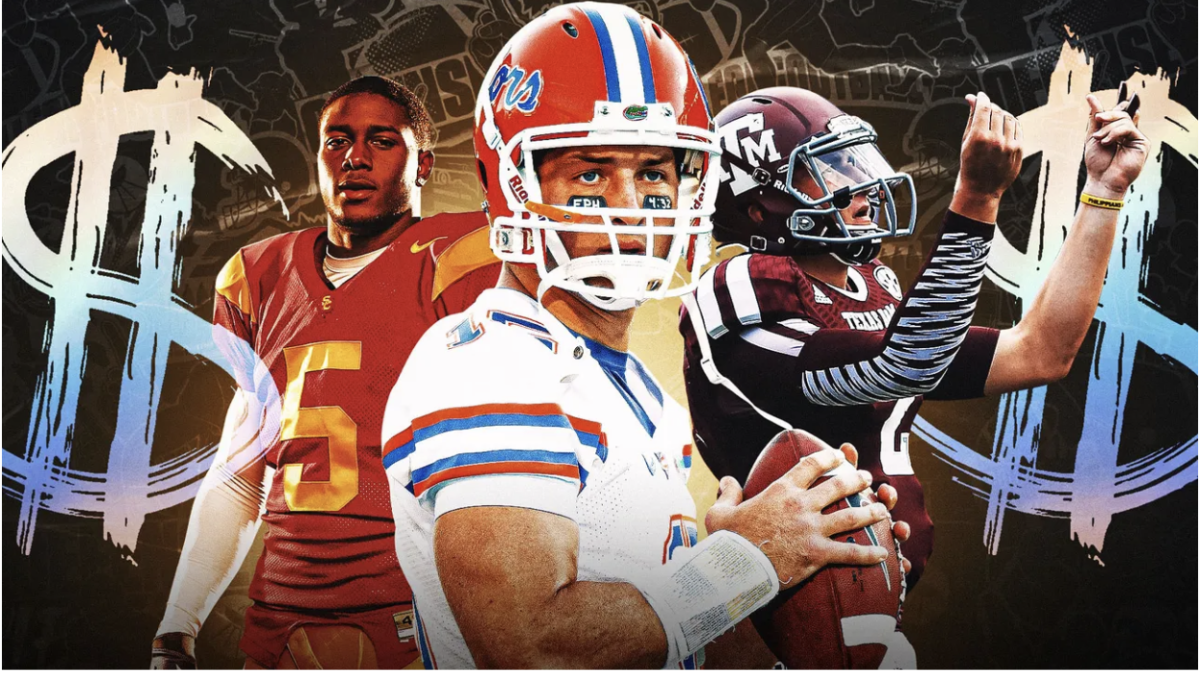
In college sports, Name, Image, and Likeness (NIL) is one of the biggest ways college athletes can make money, especially in football. But what does NIL really mean? NIL refers to the legal rights that college athletes have to make money from their personal brands. Through NIL deals, athletes can make money through things like corporate sponsorships, social media endorsements, and merchandise sales.
But why exactly is this making an impact on college football? One of the main goals for college football programs is to recruit top high school prospects, and many schools use money to their advantage to try to persuade the athletes for a better chance at landing them at their college. Some people may argue that college football has lost what has made it unique: loyalty, player development, and amateur tradition.
Derek Allen, a staff writer at North Allegheny High, describes, “The money made can impact a player for the rest of their lives in a very positive manner. But to look at it as a fan, a smaller school can use the NIL money they have to find and recruit loyal players to help build a team. It can also give the smaller teams in bigger conferences the chance to make a splash in the transfer portal and build a team.”
In some ways, NIL can be very good, as it can help teams with a worse history use money to buy and pay top recruits out of high school to help build their football team. This is making a huge impact on college football and even all college sports.
I asked a few students their thoughts on NIL. Brian Murray, a senior at HHS, exclaimed, “I think that NIL can be good in many ways as it can make a big impact on smaller football programs.” John Walsh, a junior at HHS, also explained, “I love the NIL system as it can get top players wealthy quickly.”
There is also a major downside to NIL – as teams can recruit and spend millions on players just for them to not perform the way they were hoping. So, should money really be involved in college football?