





























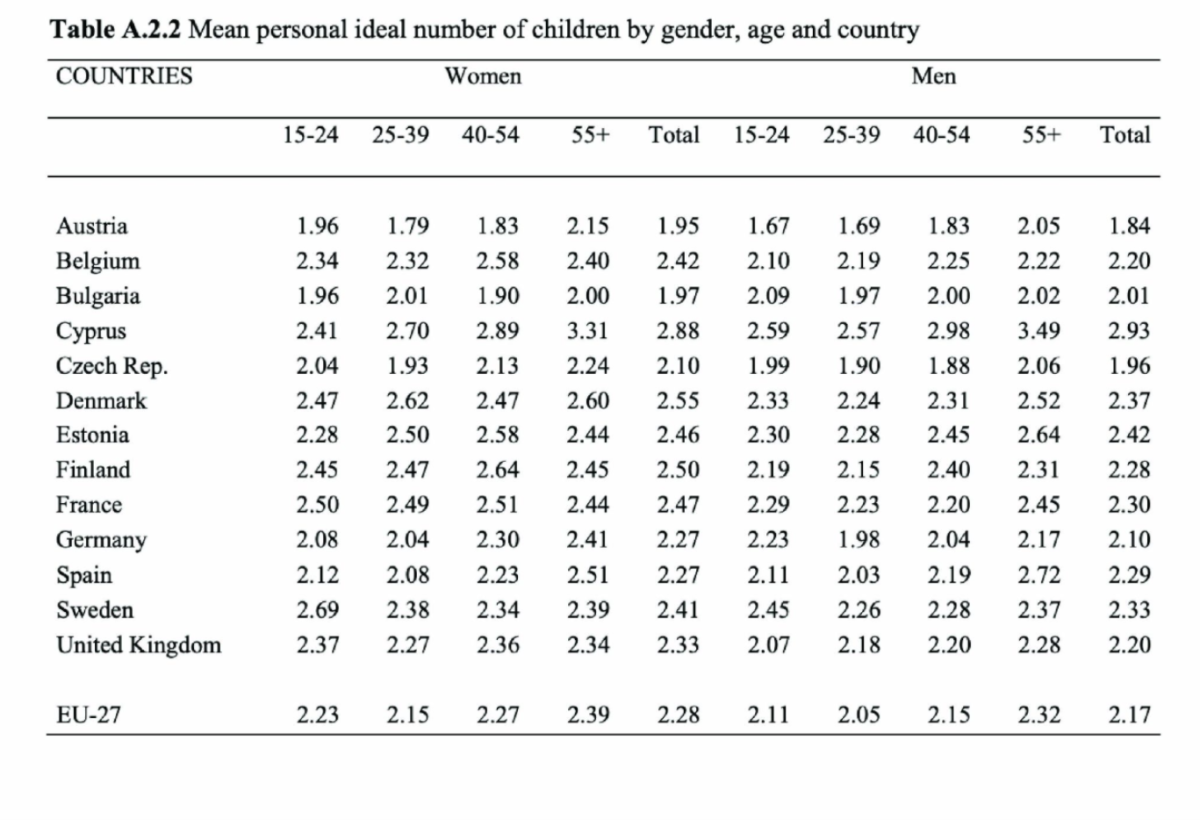
A stable fertility rate is defined as 2.1 children per fertile reproductive age woman. The current global fertility rate is 2.24, and that is only being held above the replacement rate by third-world countries in Africa and Asia. But why are fertility rates falling when they were at their highest just a couple of decades ago?
Fertility rates have been declining everywhere since the baby boom and show no sign of stopping. While this does not seem to be a problem at the moment, once the effects hit, they hit hard.
South Korea is often used to demonstrate how fast low fertility can become a problem. As of 2023, South Korea’s fertility rate was only .72 children per reproductive-age woman. If this rate persists, it would mean 100 people would have 36 kids, who would, in turn, only have 13, who would have 5. In just three generations, the population becomes one twentieth of its original size.
“This is shocking,” said Walter Drews, “I wonder what ramifications this could have for South Korea’s economy and culture.”
The USA has it better than South Korea, with an average fertility rate of 1.62 that stayed relatively close to the replacement rate until the Great Recession, while South Korea’s fertility has been below the replacement rate since the 80s. The USA might also be able to prevent, or at least put off, the effects of declining fertility with its high immigration rates that allow immigrants to make up for the lack of American workers entering the workforce.
One of the main issues fertility declines present is population aging. As aforementioned, when fewer and fewer children are born, there will be fewer people to replace older citizens leaving the workforce for retirement, though immigration can curb this issue. The problem lies not only in the workforce, though. Retirees require their pension funds to be paid by the younger generations and rely on them for medical assistance because roughly 75% of the medical help a person will ever need is required after they retire. Despite all this, seniors are more likely to vote against policies that invest in the future, like those that would help boost fertility rates.
There are some positives, such as the reduced strain on the environment that a smaller population would have. Megan Buckley, when informed about this situation, stated, “I think it could be good that people are deciding to have fewer children due to depleted natural resources.”
In order to prevent the fertility crisis, forward-thinking policies need to be implemented that encourage young couples to have children, such as laws that would relieve the costs of raising children. Others have shared that crises such as climate change have discouraged them from having their desired number of kids, so solving those problems will boost fertility as well.
While it may not seem like a problem at the moment, now is the best time to act in order to stop the fertility crisis.