























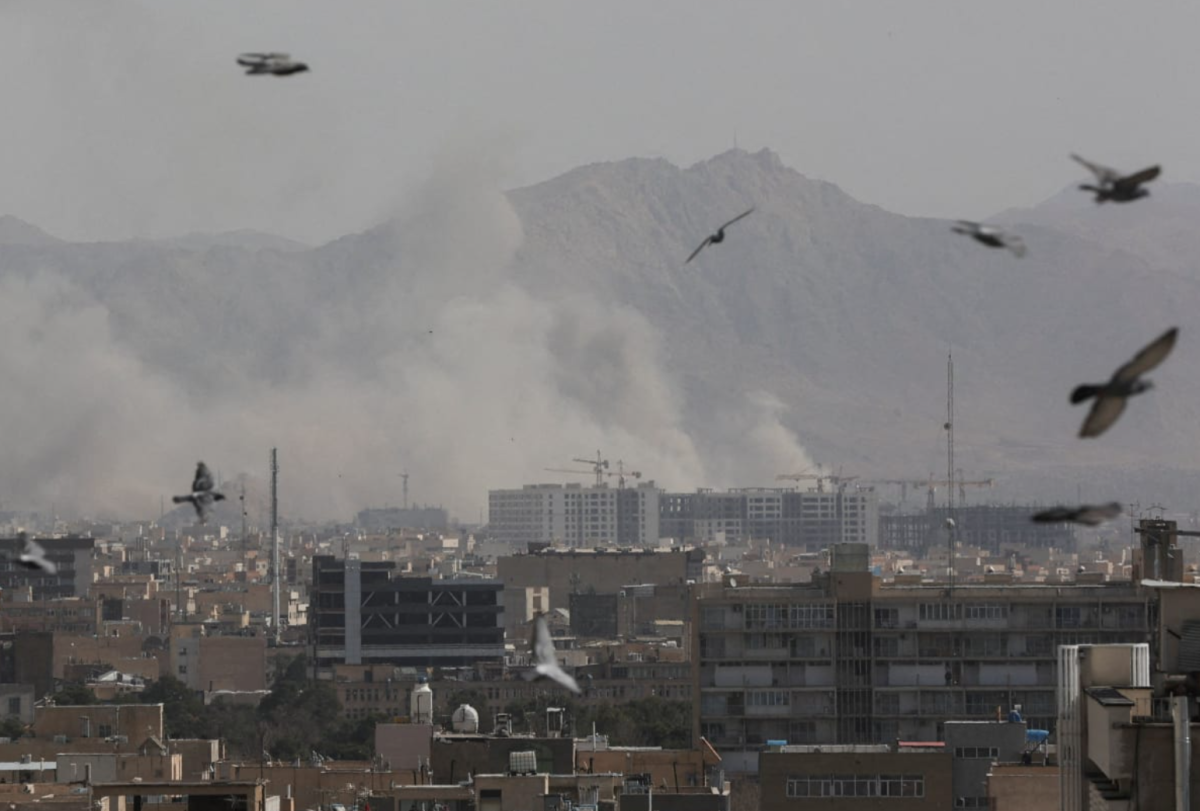
In the early hours of February 28, 2026, the United States military carried out a stealthy yet dangerous mission, bombing and destroying Iran’s nuclear facilities, missile factories, and even their naval capabilities. Cities like Fordow, Natanz, and Esfahan were all main targets in this coordinated attack, killing over 3,000 people. According to reports from Detroit News, “U.S.-based rights group HRANA said on March 21 that 3,230 people have been killed. It said 1,406 of those were civilians, including at least 210 children”(Nayera Abdallah and Menna Alaaeldin).
But why did the United States attack Iran? The history between these two countries goes back to 1979, during the Islamic Revolution. The United States mainly attacked Iran to prevent nuclear weapons from being developed and in its custody, as Iran has very unstable leadership. The U.S wanted to destroy many nuclear facilities to stop further attacks from Iran, and during the attacks on February 28, it destroyed significant military infrastructure.
The United States is very happy with its operations for one big reason: the killing of Iranian Supreme Leader, Ayatollah Ali Khamenei. This was very noteworthy because it could eliminate major threats against the U.S and also could encourage a big regime change in Iran.
Not only did it affect the military infrastructure of Iran, but it also highly affected the global energy markets, triggering the largest energy supply disruption in the history of the world, highly characterized by the closing of the Strait of Hormuz. Many energy buildings were also destroyed in the attacks.
The New York Post states, “The head of the International Energy Agency said Monday that at least 40 critical energy assets across nine countries in the Middle East have been ‘severely or very severely damaged, ‘ threatening to keep oil prices higher for longer even if the war in Iran ends soon” (Taylor Herzlich).
But why exactly are oil prices rising? Iran is a major oil producer, exporting about 1.4 to 2.17 million barrels of oil per day before the war. But as a result of the attacks, the main waterway called the Strait of Hormuz has been shut down. This is crucial as about 20% of the world’s oil passes through this, and if no oil can get through, there will be limited oil for countries like the U.S. But countries in Europe and Asia also rely heavily on the Middle East for oil.
I wanted to connect these conflicts with people’s everyday lives, with oil inventory in a crisis, and gas prices having risen to about $3.90 per gallon, also causing massive inflation as a 10% oil increase can raise U.S inflation by about 0.35%
I asked a few students their thoughts on what they think about the gas prices rising. John Walsh, a Junior at HHS, describes, “I think that it is absurd that I am spending about $75 for a full tank of gas.”
This is highly affecting younger kids with a license, as some kids do not work, and it is hard for them to pay for gas, but even those who do work, gas is still very expensive. Grady Ward, also a Junior at HHS, explains, “I do not have time to work during the school year due to sports, so with the gas prices rising, it will be annoying spending a lot of my money on overpriced gas.”