





















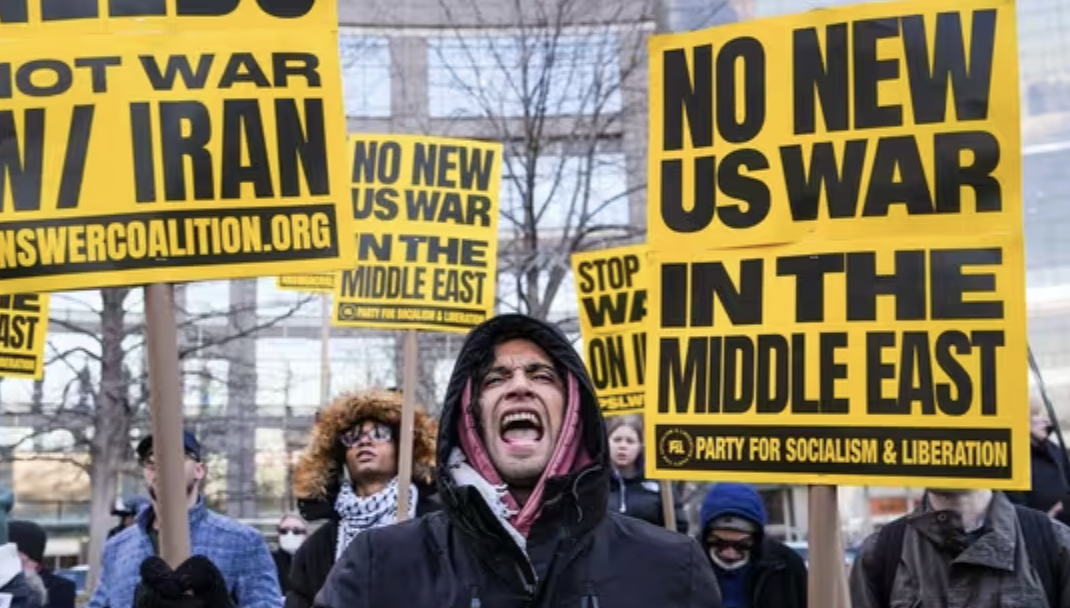
The United States and the Middle East have long had brewing tensions, previously seen through the Afghanistan invasion and the Gulf War. However, in 2026, this tension has spiked tremendously, leaving many Americans worried about the possibility of another war in the Middle East. What began as economic pressures has turned into an aggressive, militaristic debate, disrupting the flow of the economy and leading to an increase in weaponry.
The primary disagreement of these tensions is due to Iran’s nuclear programs and whether they should be allowed to have nuclear weaponry, which the United States heavily opposes. Iran has claimed that their development of nuclear weapons is not for destruction, but rather as a means of security measure.
Junior Brady Marks states, “I personally believe Iran should not have nuclear weapons due to the unpredictable nature of the country. What we are seeing in real time is enough evidence to support that nuclear weapon development is unnecessary.” Iran has said that it will not stop any development. Despite having multiple negotiations, these have led nowhere, and conflict has still persisted between these two countries.
Military tensions have increased with the United States calling for more military presence in the region, for example, more soldiers on the ground. This has forced a naval blockade on important Iranian ports, hoping to apply pressure as it would significantly affect their economy. In retaliation, Iran has threatened and allegedly attacked ships in the Strait of Hormuz, which is a global oil route, temporarily increasing the gas prices for the average American.
Senior Tommy Hartnett says, “Due to this conflict, gas has increasingly gotten more expensive. I thought gas was expensive before, but now the prices are even higher.” Many Americans and students within HHS are not happy with having to pay more for gas. The Strait of Hormuz is vital for international trade, and delays in this system can have immediate global implications.
Economically, the United States has expanded its sanctions and is allegedly planning to take all oil shipments from Iran. Such measures have been justified as they have been designed to weaken Iran’s economy, but have also created an immense amount of tension between the two.
Despite these tensions, other countries have tried to assist in calming down these tensions. For instance, Pakistan and Oman have attempted to soothe the aggression. While initial progress proved to be helpful, Iran and the U.S. have been undermined by the constant military aggression and mistrust coming from both countries’ leaders. More importantly, the U.S. and Iran have been negotiating on a ceasefire agreement, with minimal progress being reached. In newly released press, Iran has said that the Strait of Hormuz will not remain open if the U.S. does not lift its naval blockade, proving that there is still more progress to be made.
This is a very dangerous situation that represents global destruction, from the economy to missile strikes. If there is no quick solution, global stability could be at risk.