























Big headlines conquer every major news platform for certain periods of time, demanding attention from every viewer. However, viewer interest only lasts so long, leading to quick replacements of the once dominating stories.
Once commanding every platform, the Russia and Ukraine war has fallen victim to this exact cycle, leaving the limelight with so much more to be told.
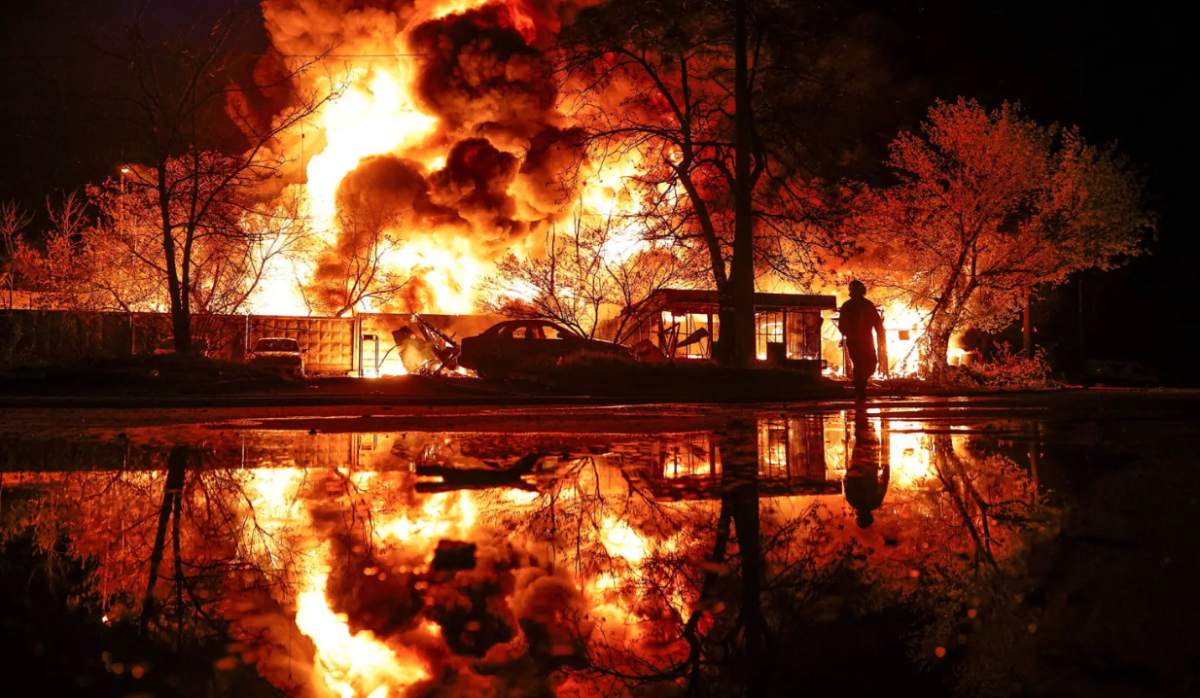
Originating in 2014, the two neighboring countries have held animosity towards one another for numerous years, however on February 22, 2022, the threats from Russia erupted into action. The Russian military invaded on all sides of Ukraine, in hopes to decimate the country and return the land back to Russia, restoring the land pattern from the Soviet Union.
Being an ally of NATO (North Atlantic Treaty Organization), Ukraine’s vulnerable position gained support from the United States, and with that support came coverage. CNN, NBC, and countless other broadcasters informed Americans on all that was going on in the conflict, going so far as to putting their own reporters in the active warzone. American citizens began to feel that the involvement from the United States would paint an unwanted target from one of the most powerful countries in the world.
Sophomore Ella Falconeiri remembers feeling, “worried that my country would be under attack and that my own family and friends were going to be drafted.” While 5,600 miles away, Ukraine’s close connections with America and the rest of NATO led to the conflict feeling much closer to home.
Even with the war still raging on, the media found other stories to focus on, and Americans lost engagement as quickly as they had gained it. Rory O’Neil remarked, “I heard about it about a year ago but haven’t heard much about it recently”.
With so much riding on this seemingly-disappearing conflict, an update is much needed on what has happened since the news was redirected and where this war is heading.
Contrary to Vladimir Putin (the leader of Russia)’s beliefs, the small size of Ukraine did not correlate to its military power and outside support. March of 2022 brought paused sanctions with Russia from the UK and a world-wide Russian disconnect continued to form.
After being an active member in the war, Ukraine issued a request to join the European Union under an emergency request, and further urged international alliances to further intervene. Over the course of March and April 2022, US president Joe Biden increased military support to Ukraine another $800 million, while Russia left the European Union.
Continued tensions rose, and fighting has continued up to the present day. Most recently, a ceasefire filed by Putin in respect for Orthodox Easter was quickly contradicted. What was supposed to be a 32 hour peace period already had 2,299 violations by 7 in the morning the following day, according to Ukrainian officials.
With the war now entering its fifth year, the recently failed ceasefire shows lack of promise towards peace. In terms of the US’s role currently, as of December 31, 2025 the US has given around 188 billion dollars of aid to Ukraine.
As of now the direction of the war is a constant power struggle, however Ukraine seems to be weakening Russia’s economy and military in a significant way. While an outcome is not yet clear, Ukraine has had an underdog story in terms of holding their own thus far, yet how long can they maintain momentum?