


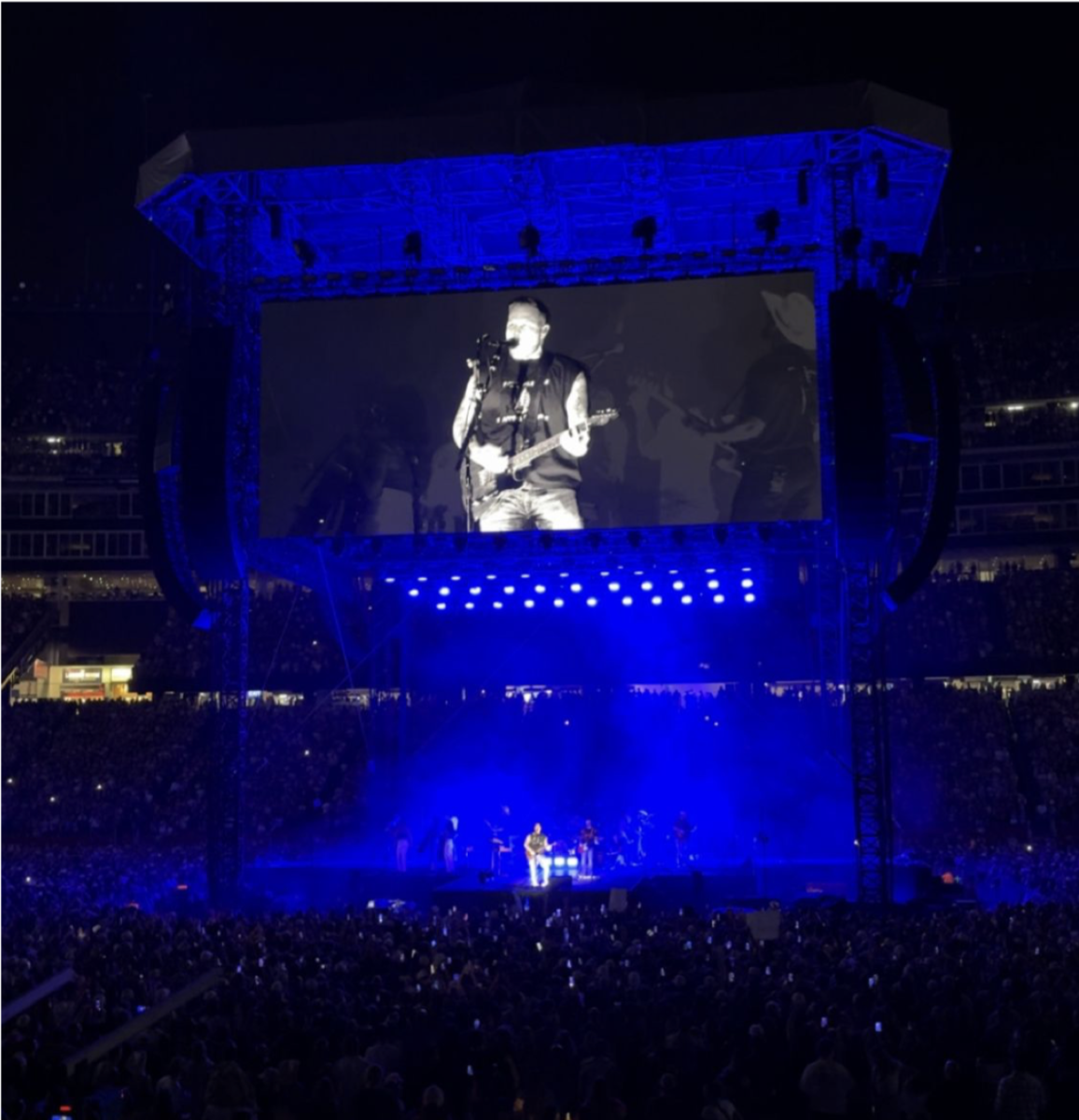




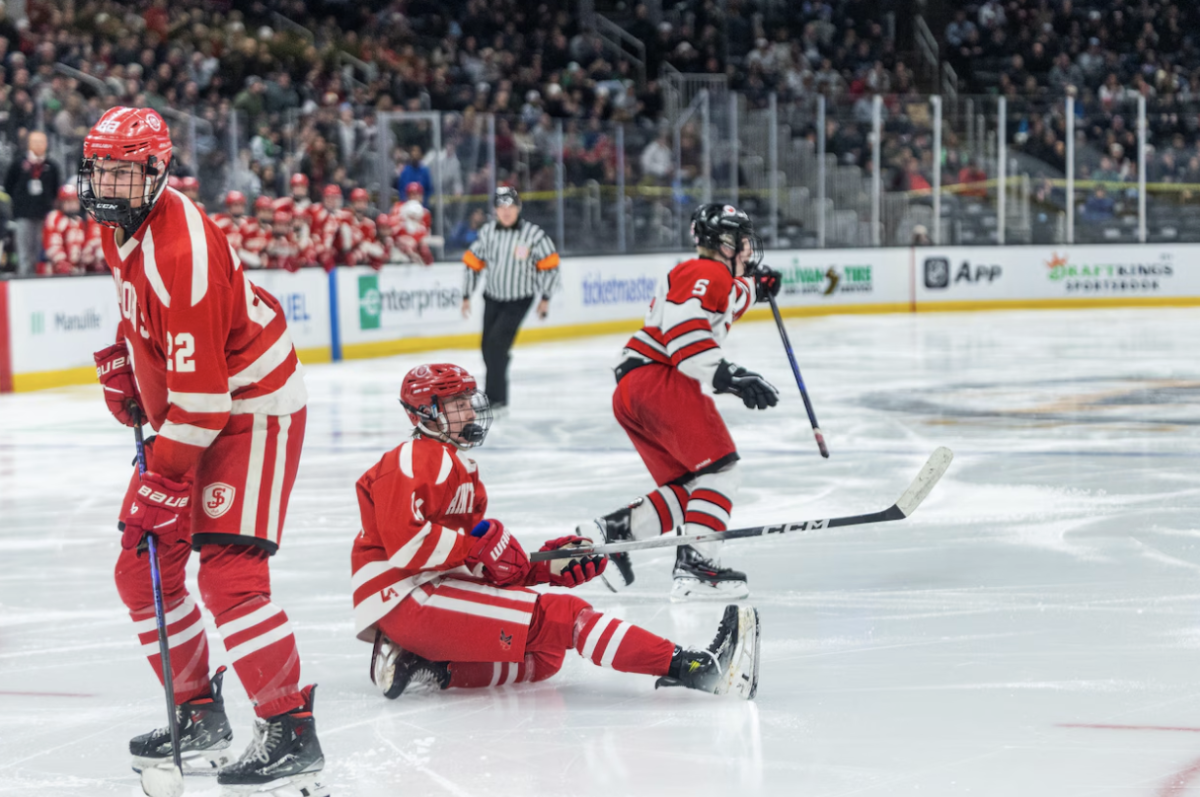
The MIAA wrapped up the 2025-26 winter season last Sunday, with the Pope Francis Cardinals defeating the Saint John’s Pioneers 2-1 in overtime at TD Garden. The Pioneers suffered a heartbreaking defeat at TD Garden for the second year in a row, after falling 4-3 to Catholic Memorial on a goal with under a minute remaining in regulation the season before. The matchup capped off another unpredictable postseason, which saw the top 3 seeds eliminated before the Final Four and a #7 vs #8 matchup in the State Championship game.
The game went scoreless until midway through the 2nd period, where Pope Francis senior Wolfgang Zinger put away a rebound left by Pioneers goaltender Colin McCarthy. Saint John’s would quickly answer just two minutes later, when a seemingly harmless dump-in off the stick of senior Sahvy Andino found its way past Cardinals goaltender George Ramsey. There wouldn’t be another goal until just over a minute into the second overtime, where Whitaker Zinger found fellow sophomore Luke Latulippe in the high slot, who went bar down, crowning Pope Francis state champions for the second time in the Power Rankings era.
The championship comes in what was supposed to be a down year for Brian Foley’s team. Despite only losing three seniors, the team struggled early in the year and finished the regular season ranked outside of the top four for only the second time since the introduction of the statewide power rankings. The team caught fire in the postseason on their Road to the Garden, rallying around the production of seniors Matt Regan and Wolfgang Zinger, along with junior Gabe Kolodjay.
Despite all of this, the most consequential part of this season came in late January, when the MIAA hockey committee passed a vote to bring back the Super 8 tournament beginning in the 2027-28 season. The tournament originally began in 1991 as a separate championship for the Catholic schools, who had won six consecutive Division 1 state championships in the years leading up to the change.
The Super 8 was put on pause after the 2020 final was cancelled due to the COVID pandemic, with the main concerns being equity and compatibility with the new statewide format. When state tournaments resumed in the 2021-22 season, they came with new statewide tournament brackets and power rankings as opposed to the previous sectional format. The top 32 teams in each division now automatically qualified for the state tournament, and everyone else above .500 qualified for a play-in game.
The results since then have been mixed. While those against the Super 8 may argue that there have been plenty of upsets in the Round of 16 and beyond, seeding is less of a factor in a 32 team tournament and parity alone was never the reason the Super 8 was created to begin with. In addition, the first editions of the statewide tournament saw few upsets compared to the most recent ones.
The main reason for the tournament is still present. We have yet to see a public school win a Division 1 title since the pausing of the Super 8. Only one public school has even made it to the State title game, with that being Winchester in 2024, who fell to St. John’s Prep. Additionally, this season has been the only tournament with multiple public schools in the Final Four, with Hingham and Arlington both losing. In the five seasons of the statewide tournament, four of the state titles have been claimed by SJP or Pope Francis, while the other was won by CM.
There will also be a Girls Super 8 for the first time, although not completely necessary. One of the main reasons for the original pausing of the Super 8 was the lack of a Girls tournament. That concern has now been solved. A Girls Super 8 will be interesting, considering that parity and Catholic dominance aren’t as apparent.
There has been a different champion at the D1 Girls level every season since 2018, when Woburn repeated, and the only team to win multiple State championships is Methuen/Tewksbury. Additionally, public schools have won more state championships than Catholics since the introduction of the Statewide format.
The new Super 8 will feature a pool play format as opposed to the previous double elimination format that was featured up until the tournament’s pausing. Teams will be split into two groups where they will then play round robin, with the top two teams in each group advancing to the single elimination Final Four.
“I’m excited to see how the new format plays out,” said HHS sophomore Nick Bigelow. “It’ll be really fun to see the changes and how different it will be from the old format.”
One of the biggest concerns with adding two tournaments is venue availability. State championships at TD Garden will likely need to be split into two days, with one day barely being enough time as-is, and one overtime game throwing off the rest of the schedule. Preferential venues were also cited as one of the reasons for the pausing of the Super 8 initially, but smaller venues tend to make sense for lower divisions, as those are smaller schools with less of an ability to fill large venues.
“I would much rather play in a packed 1,500 seat arena than an empty 8,000 seat arena,” said HHS senior and hockey player James Whitmore. “The experience of playoff hockey comes in the atmosphere and energy that comes with playing in front of your boys. We’re really lucky to have such a great student section that can fill up bigger arenas.”
With the Super 8 on deck to return in a rapidly changing landscape of High School hockey, many wonder about the effect it will have not only on the MIAA, but also on Prep and Junior hockey in the area. Potentially we see more players opt to stay with their schools as opposed to leaving and playing prep and junior. But it’s all speculation until the tournament actually returns.