





















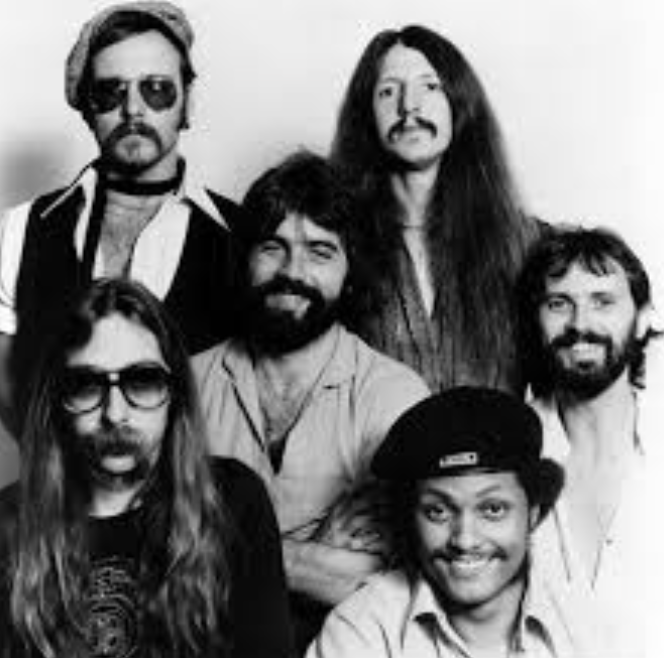
You might know the Doobie Brothers from their smash hits “Listen to the Music” and “Long Train Runnin’” from the early 70s. These songs were from when the band was fronted by lead singer and guitarist Tom Johnston.
They were on the trajectory of greatness when Johnston was diagnosed with a bleeding ulcer in 1974, preventing him from singing for an extended period of time. In light of this situation, the band decided to replace him with a promising young keyboardist named Michael McDonald, who had recently worked with Steely Dan.
After a few years with the band, McDonald struck gold in 1978 when he wrote “What a Fool Believes” with pop star Kenny Loggins off the album Minute by Minute. The album went on to win the Grammy Award for Record of the Year, and “What a Fool Believes” reached number one on the Billboard Hot 100 for one week.
The song “What a Fool Believes” exemplifies the signature sound of the McDonald-era Doobie Brothers: soulful yet sophisticated. This unique sound was a contributing factor to the “Yacht Rock” aesthetic of the mid to late 70s.
Although the Johnston era of the Doobies was a higher-energy, more blues-based vibe, I personally enjoy the polished sound and sophisticated songwriting of McDonald. I think there are three factors as to why this song is great: The lyrics, the catchiness, and the harmonic structure.
The lyrics follow the story of a guy (the fool) who is hopelessly in love with someone who doesn’t love him back. He thinks that they had a relationship in the past and tries to get her to reminisce, but he realizes that what they had was nothing more than just a friendship. It’s a heartbreaking yet hauntingly beautiful story, and the chorus says something very profound, that “what seems to be is always better than nothing.”
Junior at HHS Jacob Lewack laments, “this song has a powerful message because you can’t be expected to know everything. Especially at a time where there’s so much uncertainty with Juniors trying to figure out college and Seniors submitting decisions, sometimes what seems to be really is better than nothing.”
Another reason why this song is so great is due to its catchiness. It starts with the keyboard intro which sets the pace for the whole song with a repeated rhythmic motif. The reason this is so catchy is because of the masterful development of this rhythm. It repeats through almost the entire song, and the parts where it doesn’t show up are tasteful pauses that let the music breathe.
Percussion connoisseur Liam O’Toole is a big fan of rhythm, and remarks that, “When rhythms are developed it makes the song more danceable.”
Finally, the greatness of “What a Fool Believes” comes from harmonic structure. For you musicians out there, the song follows a unique form with chord changes that don’t follow traditional music theory. This is not common for pop hits, but allow it to stay fresh even after many listens.
The profound lyrics, catchy grooves, and sophisticated harmony of “What a Fool Believes” by Michael McDonald and the Doobie Brothers embody the smooth, soulful sound of the 70s.