





















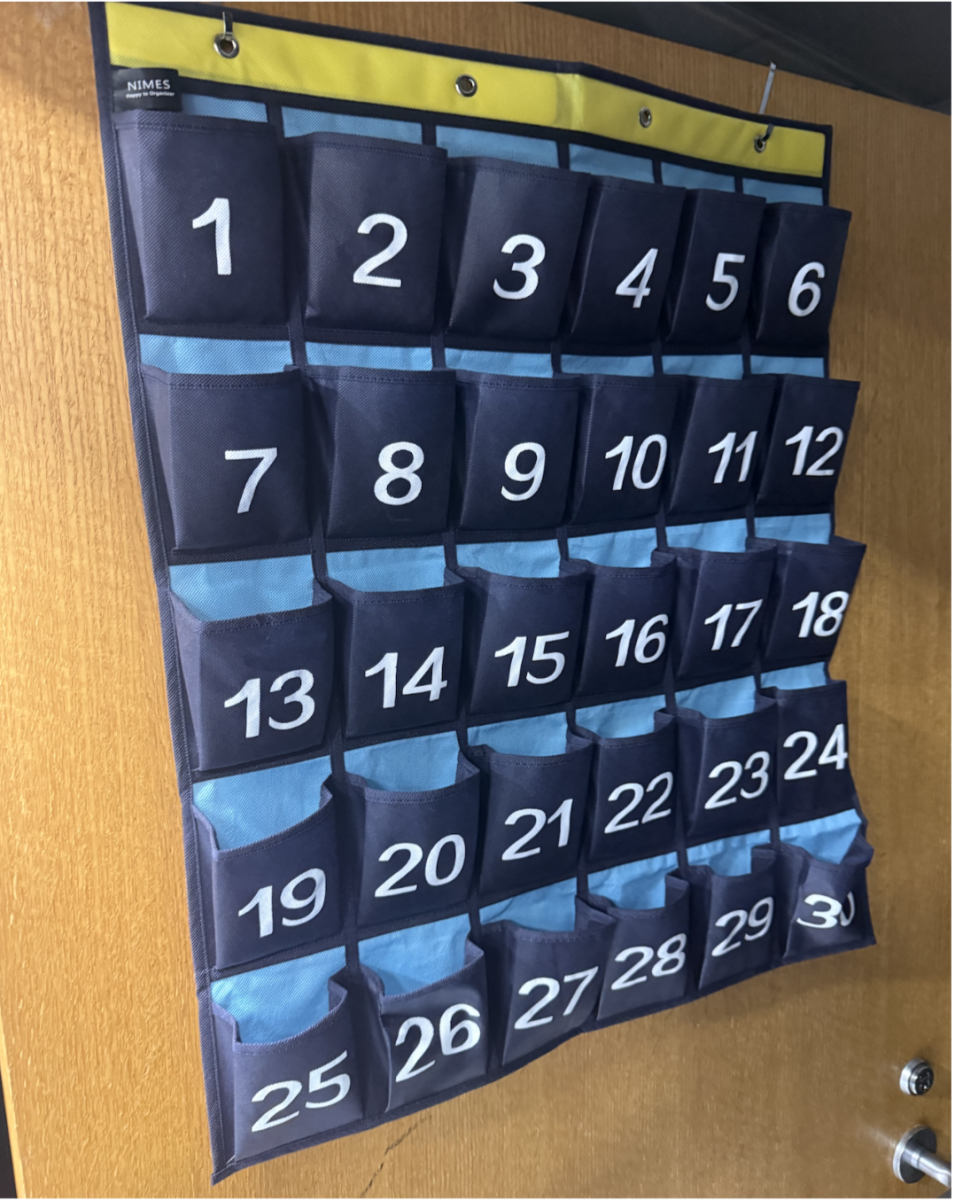
There has been a change going into classrooms at HHS over the past two years. Rather than going to sit right at your desk and getting out your pencil and notebook, an extra stop at the phone pockets has been added to this entrance ritual. While other names have emerged for the pockets, such as “phone caddy” and “phone hotel”, “phone jail” has been the general consensus for their name among teachers and students. First implemented during the 2024-2025 school year, the phone pockets were a response to the growing problem of students having their phones out during class. Oftentimes, teachers would simply take a student’s phone if they were on it during class, but the phone pockets offer a simpler solution that some teachers have even utilized to take attendance for their class.
While HHS is coming into the third year of implementing the phone jails, many students have noticed that teachers have been cracking down on making sure all of their students are properly putting their phones in their respective pockets. Junior Rex Chen says, “A lot of teachers have definitely been more active about it this year than previous years, and I’ve definitely noticed people have been better going straight into class and putting their phone away.”
Students are still divided on the importance of the phone jails. Senior Luca Arienti doesn’t really mind them, saying, “Personally they don’t affect me because I don’t use my phone, and they are not really needed during class over all.” Michael Catalfano, another HHS senior, dislikes the phone jails, saying, “I get the use of them during tests, but it’s just annoying because I feel like it represents a lack of trust between teachers and their students.” Both students here make valid arguments about the phone jails, pointing out how phone usage isn’t necessary during class and how students feel like teachers can’t trust them, pointing out the positives and the drawbacks of the pockets.
Even though students may find parting with their phone for a whole hour difficult, the decision is a hard yet necessary choice for the health of the students. According to the American Academy of Pediatrics, teens already have around 8 and a half hours of screen time a day. Such a large amount of time spent on screens can be harmful for physical health and sleep, aspects of a teenager’s life that are especially important during their high school years. HHS history teacher Mr. George, who first implemented his own phone jail policy in 2015, believes that “It’s important to reduce and or eliminate distractions when you’re trying to make progress with something”, further highlighting the importance of keeping students off of their phones during class time. Overall, they serve as a distraction to education, emphasizing why the phone jails are needed.